The James Watt Visited
Photos
Local Area
Visited as part of taking in Greenock Morton 0–1 Partick Thistle, Scottish Championship. Second-half winner by T. Letsosa in the 82nd minute. Thistle also rattled the woodwork a few times. Greenock sits on the south bank of the River Clyde at the “Tail of the Bank”, where the river widens into the Firth of Clyde. It’s the main town of Inverclyde, stuck between Gourock to the west and Port Glasgow to the east, with a population hovering around 43,000 these days after a long post-industrial slide from its early-20th-century peak of over 80,000. The name is almost certainly Gaelic Grianaig (“sunny knoll”) or Brittonic for a gravelly/sandy place. Locals stubbornly prefer the folk version involving a green oak tree that fishermen supposedly tied their boats to. No solid evidence for the tree exists, but it refuses to die: there’s a local song about it, the Oak Mall shopping centre, and enough green-oak branding to keep the legend alive. The old burgh arms wisely stuck with a ship, herring and the motto “God Speed Greenock” instead. Greenock grew from a fishing village into a major port and shipbuilding powerhouse. Scotts of Greenock started building ships in 1711; later came sugar refining, tobacco, and the kind of heavy industry that made the town a target in the Second World War. The Greenock Blitz of 6–7 May 1941 saw hundreds of German bombers hit the town over two nights. A burning distillery acted as an unwanted beacon; the shipyards largely escaped serious damage, but the civilian cost was high. Decoy fires up behind Loch Thom helped spare some bombs. Notable son number one is James Watt (born here 1736), whose steam-engine improvements basically turbo-charged the Industrial Revolution and gave the world the unit “horsepower”. Other local flavour includes the paddle-steamer Comet (first commercial steam passenger service in Europe, running Glasgow–Greenock–Helensburgh from 1812) and a connection to Nelson (a Greenock man supposedly carried the dying admiral below decks after Trafalgar).
The Pub
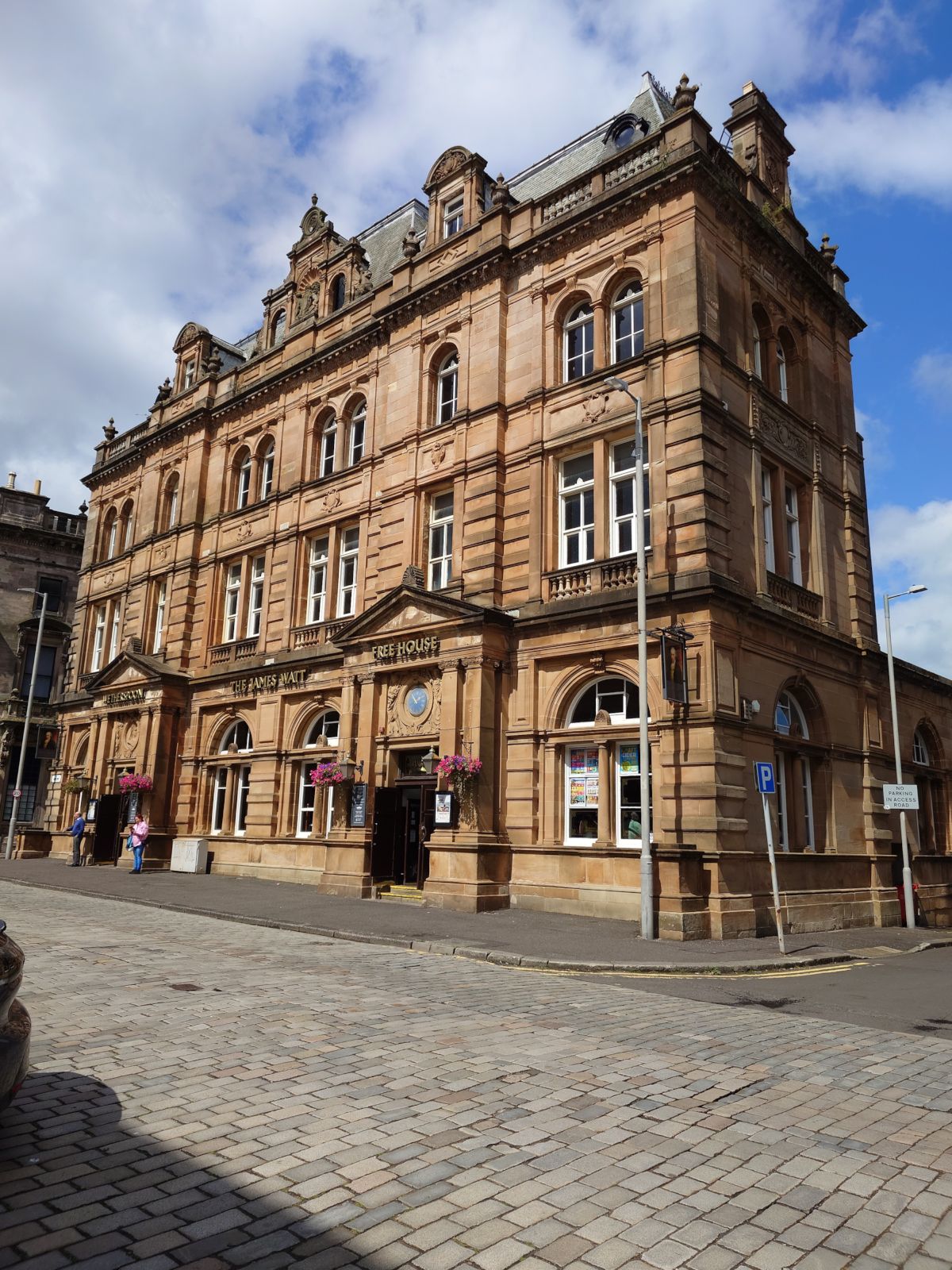
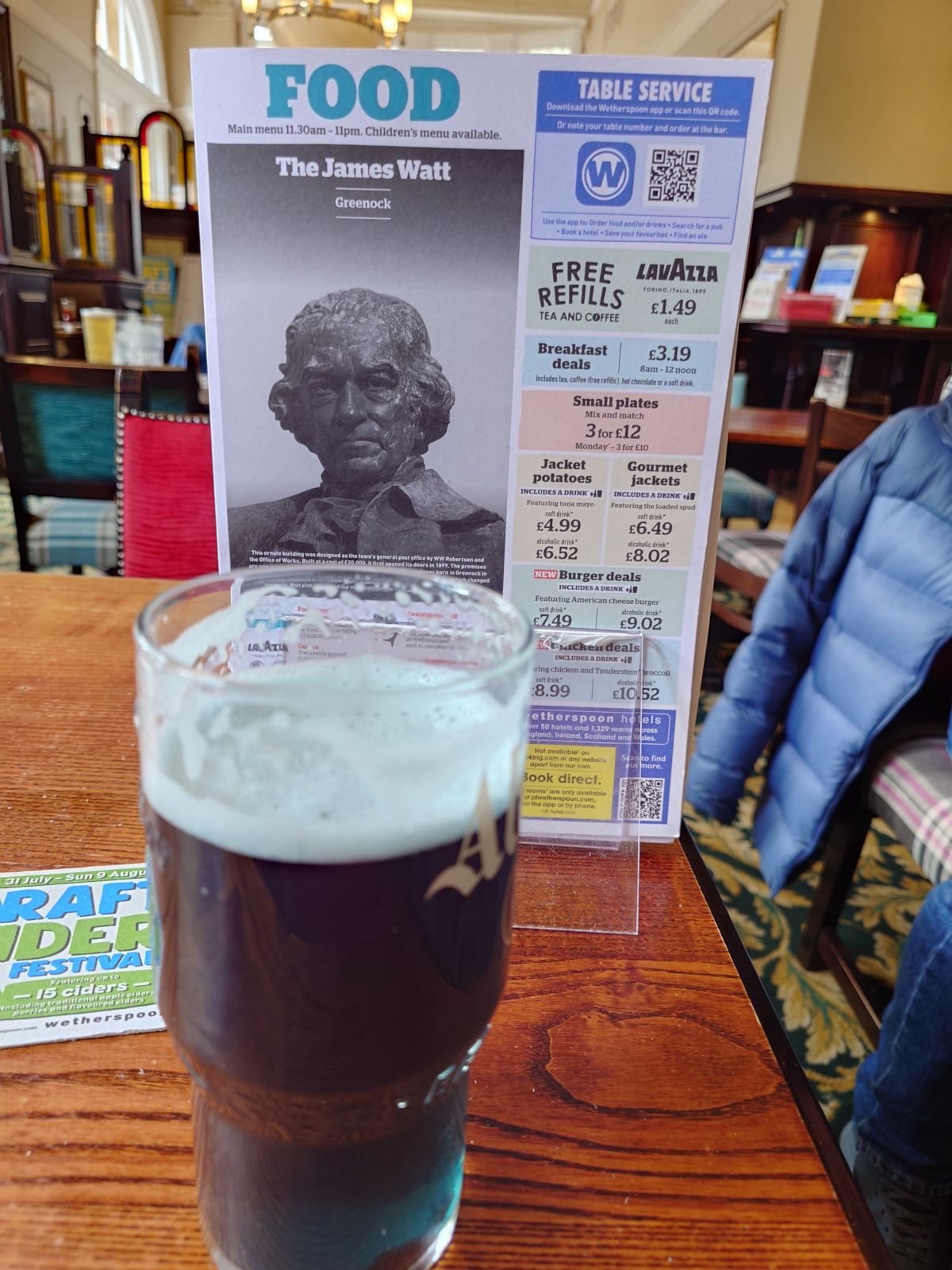
The James Watt occupies the grand former General Post Office on Cathcart Street (80–92 Cathcart Street, PA15 1DD). The ornate building was designed by W.W. Robertson and the Office of Works, cost £20,000, and opened in 1899. Before that the site housed the Tontine Hotel (1803–1892), financed by the slightly morbid tontine system in which shareholders inherit each other’s shares as they die off. Wetherspoons named it after Greenock’s most famous export, James Watt. The interior is full of the usual Spoons history panels covering Watt, the Penny Post (Greenock’s first MP Richard Wallace cast a decisive vote), the Greenock Blitz, early steamships, and Nelson’s local link. It’s a classic big-city-centre Spoons conversion of a solid Victorian public building – high ceilings, plenty of seating, and the usual mix of regulars, match-day crowds and people who just wanted a cheap pint in a building that used to sort your mail. Very busy before first league football match of season but staff were good.
Football Team
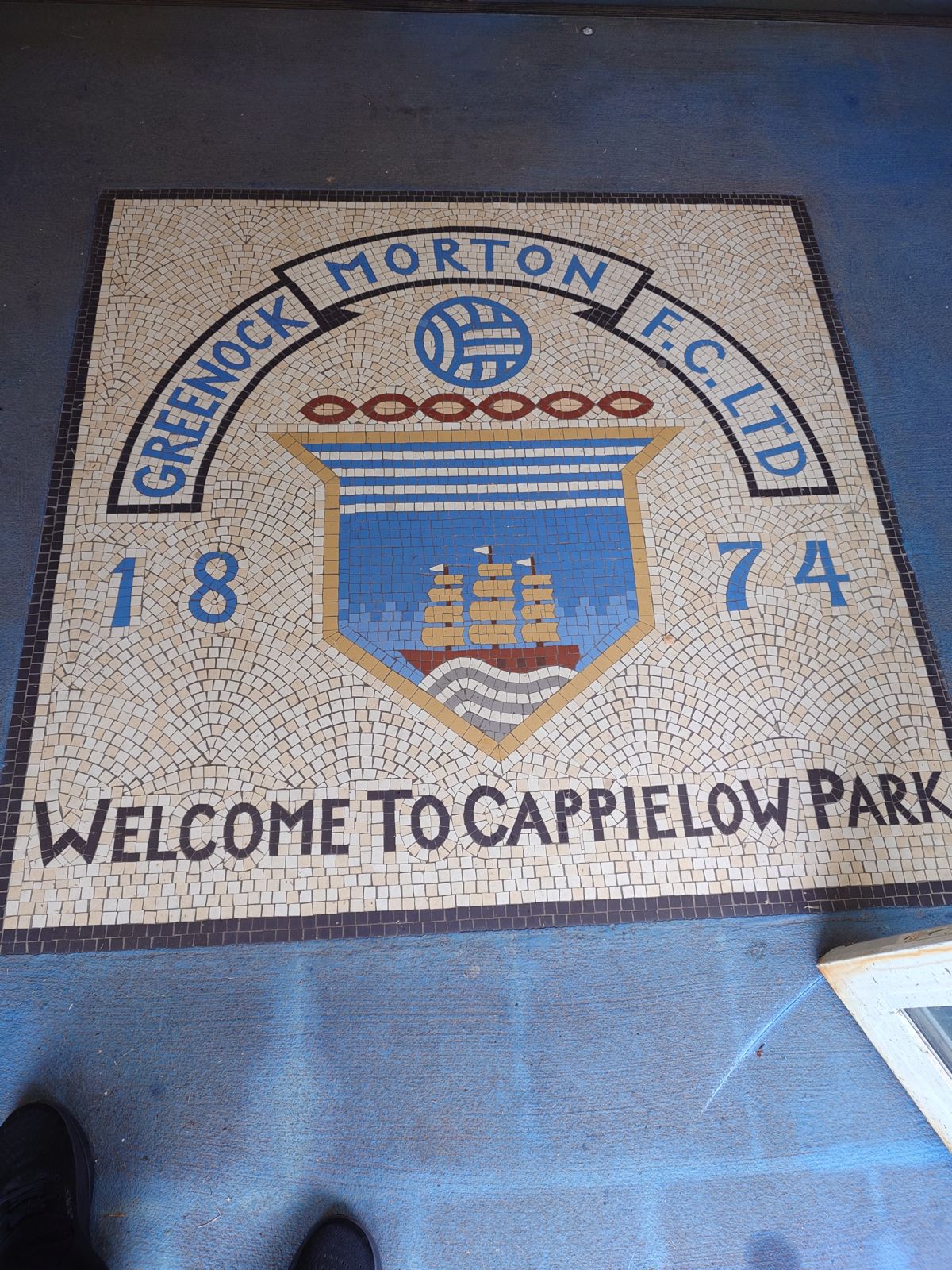
Greenock Morton FC (The Ton) were founded in 1874 as Morton Football Club and added “Greenock” to the name in 1994. They play at Cappielow Park (capacity just under 12,000), one of the more characterful grounds in the Championship – Cowshed, Wee Dublin End, uncovered terracing and all. Biggest day: Scottish Cup winners in 1922 (1–0 over Rangers, Jimmy Gourlay free-kick). They’ve also been runners-up in the Cup and League Cup, won multiple lower-league titles, and hold the slightly double-edged record for most promotions and relegations from the top flight. Fierce local rivals are St Mirren (the Renfrewshire derby). Partick Thistle is a secondary but still lively rivalry – the kind the police like to keep an eye on. The result from today’s visit was a classic gritty away win for the Jags: 1–0, late goal by T. Letsosa, a few clangs off the woodwork for good measure. First league game of the season and the place was bouncing beforehand.
Travel
First 77 to Braehead, McGills 906 to Greenock. Reverse route on way back after football.
Beers
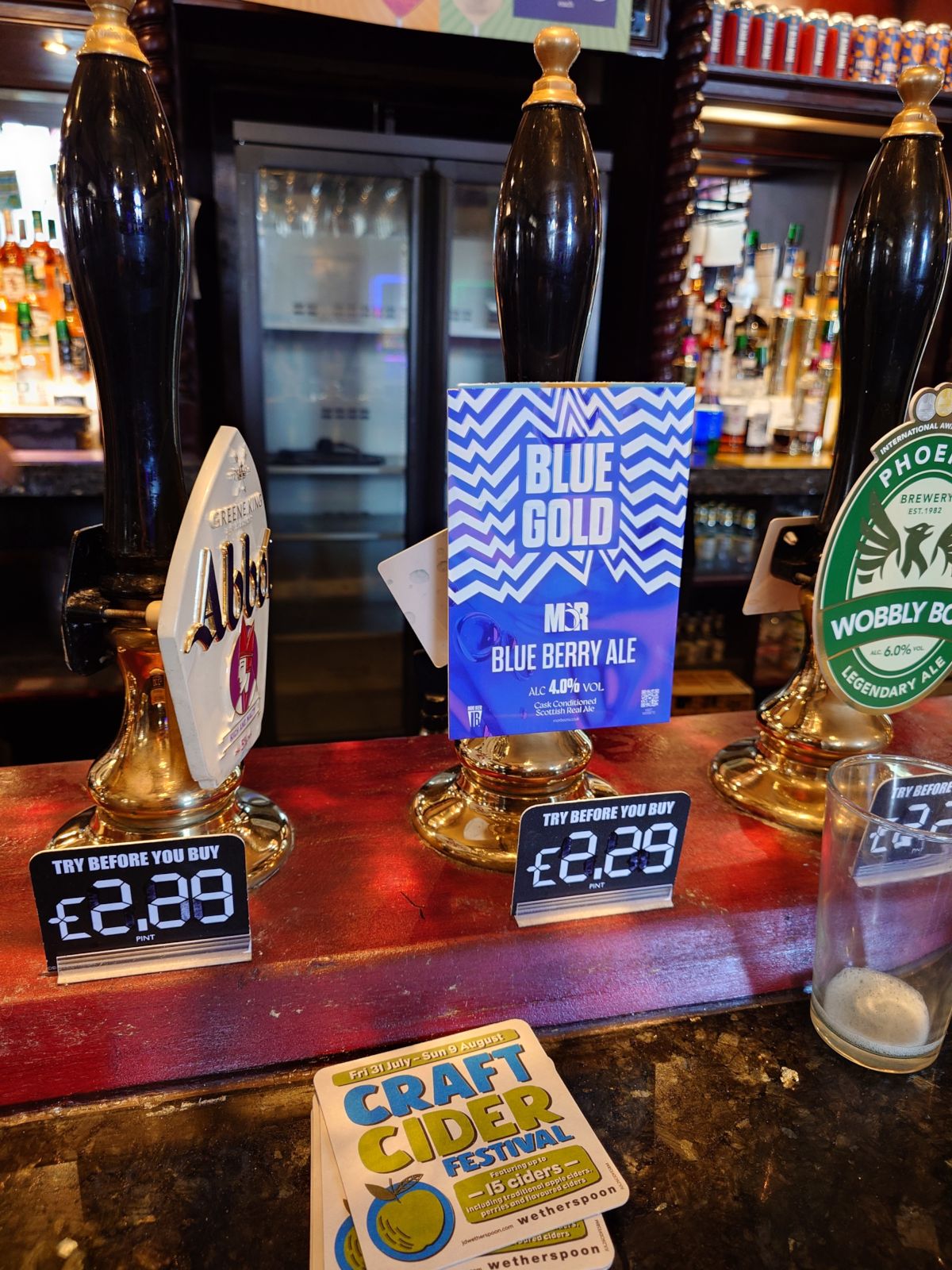
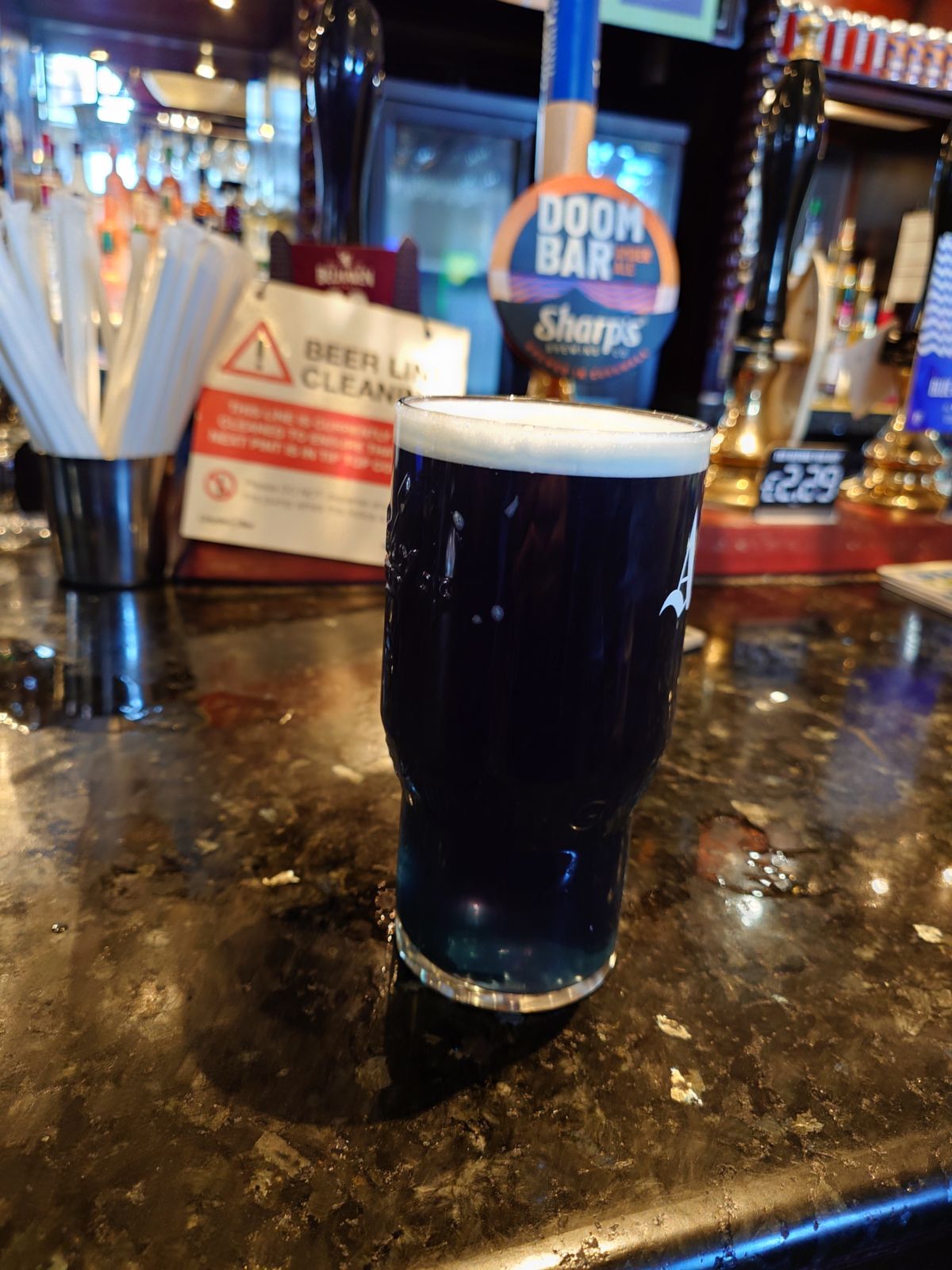
Mor Blue Gold Blue Berry Ale, £2.29. amazing pint of a blue /green coloured beer that looks like it was brewed in a witches cauldron! MòR Beers is an independent Scottish craft microbrewery located in Kellas, just outside Dundee. As the only brewery in the Angus region fully focused on filling cask real ales, they take pride in bringing unconventional, modern craft twists to traditional pub pumps. Blue Gold (Blue Berry Ale) is a 4.0% ABV golden ale brewed with blueberries and Mosaic hops. It is featured as part of the guest cask lineup across UK pubs like J.D. Wetherspoon with a visual surprise; being brewed using Scottish-grown SupaBlu spirulina alongside real blueberries, it gives the poured cask ale an unexpected greenish-blue tint. Tasting Notes; crisp pale malt base with light berry sweetness, balanced by the tropical citrus and stone-fruit notes of Mosaic hops. Food Pairings; light & Creamy Desserts, Salads: and Seafood.